
Plasma Cell precursor and Other Disorders
Category: Plasma Cell precursor and Other Disorders
Effect of Metformin on Progression-Free Survival in Patients with Monoclonal Gammopathy of Undetermined Significance (MGUS): A Phase II Interventional Study in Brazil.

Ademar Dantas da Cunha, Jr., MD, PhD (he/him/his)
Medical Director
Fortrea and UNIOESTE
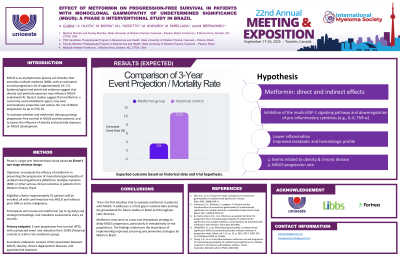
MGUS is an asymptomatic plasma cell disorder that precedes multiple myeloma (MM), with an annual progression risk of ~1%. Epidemiological and preclinical evidence suggest that obesity and pesticide exposure may influence MGUS evolution. Recent studies propose that metformin, an antidiabetic agent, may have antineoplastic properties and reduce the risk of MGUS progression by up to 53%.
To evaluate whether oral metformin therapy prolongs progression-free survival in MGUS-positive patients, and to assess the influence of obesity and pesticide exposure on MGUS development.
Methods:
Methods: Results (Expected) Metformin may serve as a low-cost therapeutic strategy to delay MGUS progression, particularly in metabolically at-risk populations. The study also highlights the need for improved screening and preventive strategies for MGUS in Brazil.
This study adopts a single-arm, phase II interventional design based on Simon’s two-stage minimax approach. It aims to evaluate the efficacy of metformin in preventing the progression of Monoclonal Gammopathy of Undetermined Significance (MGUS) to multiple myeloma (MM) or other serious clinical outcomes in patients from Western Paraná, Brazil. Inclusion criteria:
Only low-risk MGUS patients are eligible for enrollment. Patients must undergo repeat testing to confirm the MGUS diagnosis and exclude CRAB features (hypercalcemia, renal failure, anemia, bone lesions), assessed through laboratory evaluations and low-dose CT scans. Exclusion criteria: Patients with a pre-existing diagnosis of diabetes mellitus are not eligible. An exception is made for individuals whose diabetes diagnosis coincides with MGUS and who begin treatment exclusively with metformin, indicating a glucose intolerance profile rather than chronic diabetes. Participants will receive oral metformin and undergo biannual follow-up with hematologic and metabolic assessments. The primary outcome is the rate of progression to MM or other clinical events over a 3-year follow-up period. Secondary analyses will explore potential correlations between MGUS and obesity or exposure to agrochemicals. The study’s primary endpoint is the 3-year progression-free event (PFE) rate, with the hypothesis that metformin will reduce progression risk from the historical rate of 10.8% to 3.6% over the study period.
Results:
Conclusions: