
Imaging, QoL and Patient-Reported Outcome and Supportive Care
Category: Imaging, QoL and Patient-Reported Outcome and Supportive Care
Health-Related Quality of Life in Indian Patients with Multiple Myeloma: A Pan-India Digital Survey-Based Assessment


Sagaldip Singh, Final Year MBBS Student (he/him/his)
Student
Armed Forces Medical College
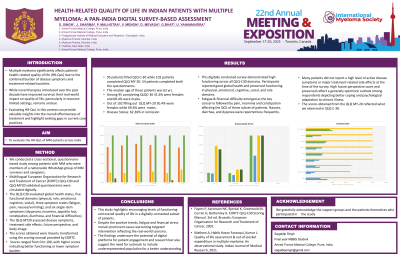
Multiple myeloma (MM) significantly affects patients' health-related quality of life (HR-QoL) due to the combined burden of disease symptoms and treatment-related toxicities. While novel therapies introduced over the past decade have improved survival, their real-world impact on quality of life, particularly in resource-limited settings, remains unclear. Evaluating HR-QoL in this context can provide valuable insights into the overall effectiveness of treatment and highlight existing gaps in current care practices. In this study, we sought to evaluate the HR-QoL of MM patients across India through a digital, patient-led survey approach.
Methods:
We conducted a cross-sectional, questionnaire-based study among patients with MM who were members of a nationwide WhatsApp group of MM survivors and caregivers. The European Organisation for Research and Treatment of Cancer (EORTC) QLQ-C30 and disease-specific QLQ-MY20 validated questionnaires were circulated through this digital platform using SurveyMonkey. Data were analysed using JMP software. The QLQ-C30 evaluated global health status, five functional domains (physical, role, emotional, cognitive, social), three symptom scales (fatigue, pain, nausea/vomiting), and six single-item symptoms (dyspnoea, insomnia, appetite loss, constipation, diarrhoea, and financial difficulties). The QLQ-MY20 assessed disease symptoms, treatment side effects, future perspective, and body image. Scores ranged from 0 to 100, with higher scores indicating better functioning or lower symptom burden.
Results:
This digitally conducted survey demonstrated high functioning across all QLQ-C30 domains. Participants reported good global health (mean: 75.26) and preserved functioning in physical (78.38), emotional (79.47), cognitive (79.12), social (74.38), and role (82.28) areas. However, fatigue (32.63) and financial difficulties (40.00) emerged as key concerns, with pain (21.20), insomnia (23.85), and constipation (28.77) also affecting quality of life. Nausea, diarrhoea, and dyspnoea were reported less frequently. The QLQ-MY20 module indicated a mild symptom burden (disease symptoms: 19.75; treatment side effects: 18.25), while scores for future perspective (77.75) and body image (70.40) reflected a generally positive outlook.
Conclusions:
This study, conducted via a pan-India WhatsApp group of MM patients, highlights encouraging levels of functioning and overall quality of life in a digitally connected subset of patients. Despite the positive trends, fatigue and financial stress remain prominent issues warranting targeted intervention. The findings underscore the potential of digital platforms for patient engagement and research but also suggest the need for broader outreach to include under-represented and less digitally literate populations for a more comprehensive understanding of HR-QoL in MM in India.