
Imaging, QoL and Patient-Reported Outcome and Supportive Care
Category: Imaging, QoL and Patient-Reported Outcome and Supportive Care
Assessing Positive Behavioral Change in Myeloma Care: An MMRF Longitudinal Study

Christopher Peña, PhD (he/him/his)
Director, Educational Programs
The Multiple Myeloma Research Foundation
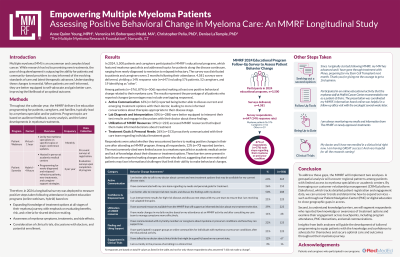
In 2024, 5,500 patients and caregivers participated in MMRF’s educational programs, featuring myeloma specialists and covering topics from diagnosis to relapse. The survey was sent to participants every 3 months post-program. Of 4,581 surveys delivered, the response rate was 14% (n=647) including 576 patients, 52 caregivers, and 19 identifying as “other”. Among patients, 87% (n=506) reported at least one positive behavioral change related to their myeloma care. The following reflects the percentage of all patients reporting changes, categories may include overlap:
To address these barriers, the MMRF will implement two analyses. A geospatial analysis will uncover regional patterns among patients with limited access to myeloma specialists or academic centers. By leveraging our CRM, which tracks patient registration, we can identify trends and explore how to expand services – such as utilizing our Patient Navigation Center (PNC) or digital education to bridge geographic gaps in access.
Second, to understand knowledge barriers, we will segment respondents who reported low knowledge or awareness about treatment options and analyze their engagement. This Includes program attendance, interactions with the PNC, and email communications.
Insights from both efforts will inform tailored programming for under-engaged audiences. Ultimately, this work strengthens education efforts that meet patients where they are – equipping them with the knowledge and confidence to advocate for themselves throughout their myeloma journey.