
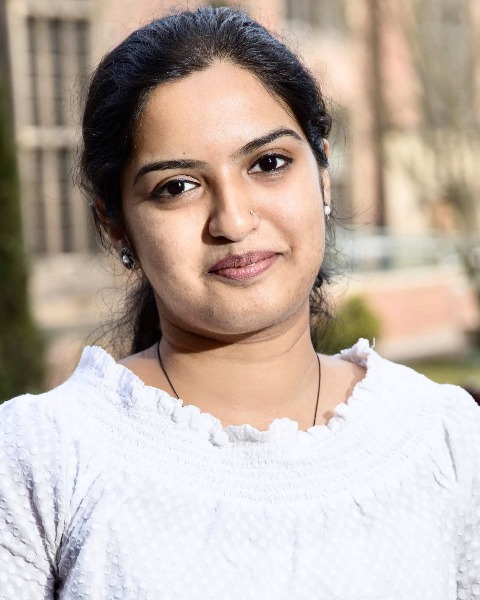
Post-doctoral Research Fellow
University of Oxford, United Kingdom
Dr. Devi Nandana is a Postdoctoral Research Scientist in the Thakurta Lab at the Oxford Translational Myeloma Centre (OTMC), within the Nuffield Department of Orthopaedics, Rheumatology and Musculoskeletal Sciences (NDORMS), University of Oxford.
Her research focuses on understanding the biological drivers of molecularly defined high-risk multiple myeloma and investigating the role of epigenetic therapies as potential treatment strategies. She is particularly interested in the mechanisms underlying drug response and resistance in multiple myeloma. Through a combination of functional genomics, mechanistic studies, and clinically relevant disease models, she seeks to define how epigenetic reprogramming can reshape the tumour landscape and restore drug sensitivity in relapsed or refractory disease.
Devi earned her PhD from Newcastle University, UK, where she studied the impact of TET2 mutations in acute myeloid leukaemia (AML) and explored the therapeutic potential of epigenetic drugs such as azacytidine in TET2-mutated AML. She then worked as a Postdoctoral Research Assistant at the Centre for Haemato-Oncology, Barts Cancer Institute, Queen Mary University of London, where she examined the role of mannose metabolism in haematopoiesis and AML using both in vitro and in vivo models.
She holds a BS-MS dual degree in Biological Sciences with a minor in Chemistry from the Indian Institute of Science Education and Research (IISER), Bhopal, supported by the prestigious INSPIRE Fellowship awarded by the Department of Science and Technology, Government of India.
Devi has broad expertise in assay development, cell-based drug screening, genome editing, flow cytometry, mouse models, molecular biology, RNA sequencing, and methylation data analysis. Her work bridges basic and translational research, contributing to the development of precision medicine approaches in haematological malignancies.
In addition to her research, she is actively involved in science communication and public engagement, participating in outreach initiatives that raise awareness of cancer research and inspire the next generation of scientists.