
Imaging, QoL and Patient-Reported Outcome and Supportive Care
Category: Imaging, QoL and Patient-Reported Outcome and Supportive Care
Navigating Myeloma: Behavioral and Emotional Outcomes from a Patient-Centered Navigation Resource

Anne Quinn Young, MPH
Chief Mission Officer
The Multiple Myeloma Research Foundation
Multiple myeloma is an uncommon and complicated blood cancer. Advances in research over the last 20 years have created numerous treatment options. However, this abundance can make it difficult for patients to stay updated with the latest therapies, especially in community settings. It is essential for patients to be aware of these developments and actively participate in their care to optimize outcomes. Our mission is to accelerate a cure for each and every patient, and one of our three strategic pillars is to empower the entire myeloma community to improve care and outcomes for all patients.
Methods:
The Patient Navigation Center (PNC) at the Multiple Myeloma Research Foundation (MMRF) is a free resource for multiple myeloma patients and caregivers. Staffed by three experienced oncology professionals, the PNC offers personalized information, emotional support, and guidance on clinical trials, empowering patients to make informed decisions. Patients can reach the PNC by phone, email, or web form, and each interaction is tracked as a case in our CRM platform. PNC nurses work with patients until their needs are addressed, and insights are shared with the education team. Monthly reviews help identify trends, ensuring key themes are integrated into education programs.
Results:
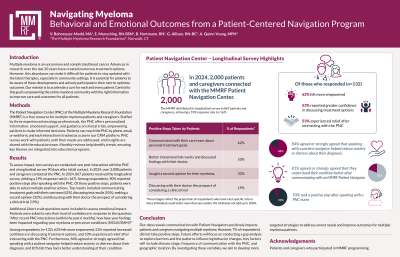
To assess impact, two surveys are conducted: one post-interaction with the PNC and a longitudinal survey 90 days after initial contact. In 2024, over 2,000 patients and caregivers contacted the PNC. In 2024, 867 patients received the longitudinal survey, yielding a 19% response rate (n=167). Among respondents, 90% reported positive steps after speaking with the PNC – key actions included communicating treatment goals with their care team (62%), discussing test results (55%), seeking a second opinion (32%), and discussing with their doctor the prospect of considering a clinical trial (19%).
Optional likert scale questions assessed emotional impact. Of those who responded (n=132), 62% felt more empowered, 53% reported greater confidence in discussing treatment options, and 53% experienced relief after interacting with the PNC. Additionally, 84% agreed or strongly agreed that speaking with a patient navigator helped reduce anxiety or distress about their diagnosis, and 81% felt they better understood their condition.
Conclusions:
Our data reveals communication with Patient Navigators positively impacts patients and caregivers navigating multiple myeloma. However, 7% of respondents did not take positive steps. Future efforts will focus on conducting a gap analysis to explore barriers and the patterns influencing behavior changes. Key factors will include disease stage, frequency of communication with the PNC, and geographic location. By investigating these variables, we aim to develop more targeted strategies to address unmet needs and improve outcomes for multiple myeloma patients