
Nursing and Allied Health Symposium
Category: Nursing & Allied Health Symposium
Supportive Care Needs and Interventions Among Hospitalised Patients with Myeloma Bone Disease: A Single-Centre Experience

Zhao Yuan Lee, MN, BHSc, Adv Dip(Oncology), Dip(Nursing)
Advanced Practice Nurse
Singapore General Hospital
Myeloma bone disease (MBD) is among the most prevalent and debilitating complications of multiple myeloma (MM), affecting approximately 80% of patients. Characterised by osteolytic lesions, MBD leads to skeletal-related events such as pathological fractures, spinal cord compression and severe bone pain. These complications contribute significantly to morbidity, hospitalisation, functional decline, productivity, quality of life, and increased mortality following major events. Consequently, MBD increases health care costs and strain, underscoring the need for effective multidisciplinary care strategies in the management of MBD.
Methods:
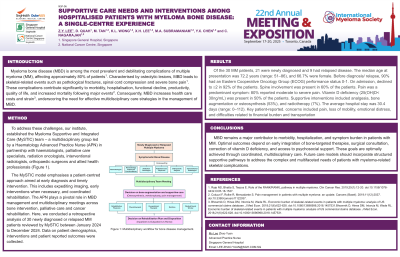
To address these challenges, our institute, established the Myeloma Supportive and Integrated Care (MySTIC) team – a multidisciplinary group led by a Haematology Advanced Practice Nurse (APN) in partnership with haematologists, palliative care specialists, radiation oncologists, interventional radiologists, orthopaedic surgeons and allied health professionals. The MySTIC model emphasises a patient-centred approach aimed at early diagnosis and timely intervention. This includes expediting imaging, early interventions when necessary, and coordinated rehabilitation. The APN plays a pivotal role in MBD management and multidisciplinary meetings across bone intervention, palliative care and cancer rehabilitation.
Here, we conducted a retrospective analysis of 30 MM patients reviewed by MySTIC between January 2024 to December 2024. Data on patient demographics, interventions and patient reported outcomes were collected.
Results:
Of the 30 MM patients, 21 were newly diagnosed and 9 had relapsed disease. The median age at presentation was 72.2 years (range: 51–86), and 66.7% were female. Before diagnosis/ relapse, 90% had an Eastern Cooperative Oncology Group (ECOG) performance status 0-1. On admission, declined to ³2 in 92% of the patients. Spine involvement was present in 60% of the patients. Pain was a predominant symptom: 80% reported moderate to severe pain. Vitamin D deficiency (25(OH)D< 30ng/mL) was present in 50% of the patients. Interventions included analgesia, bone augmentation or osteosynthesis (53%), and radiotherapy (7%). The average hospital stay was 30.4 days (range: 0–112). Key patient-reported concerns included pain, loss of mobility, emotional distress, and difficulties related to financial burden and transportation.
Conclusions: MBD remains a major contributor to morbidity, hospitalization, and symptom burden in patients with MM. Optimal outcomes depend on early integration of bone-targeted therapies, surgical consultation, correction of vitamin D deficiency, and access to psychosocial support. These goals are optimally achieved through coordinated, multidisciplinary care. Future care models should incorporate structured supportive pathways to address the complex and multifaceted needs of patients with myeloma-related skeletal complications.